


If you wake up with a sore jaw, dull headaches, or teeth that feel tender for no clear reason, you may be dealing with bruxism. Teeth grinding and clenching during sleep can quietly wear down enamel, crack fillings, and strain the muscles that support your bite. Many people do not realize they grind their teeth until the damage has already started, and without intervention, the condition can progress to chronic jaw pain, tooth fractures, and costly restorative dentistry work down the road.
At Pauley Family Dentistry in Lincoln, NE, Dr. Sean Pauley provides custom nightguards designed to protect your teeth, relieve jaw tension, and help you sleep more comfortably. Every nightguard is fabricated from precise impressions of your teeth and bite, creating a fit that over-the-counter options cannot match. Whether you have recently noticed signs of grinding or have dealt with bruxism for years, our team will evaluate your situation and build a treatment plan around your needs.
Understanding Bruxism and Its Effects on Your Oral Health
Bruxism is a condition characterized by the involuntary grinding or clenching of teeth, most commonly during sleep. According to the National Institute of Dental and Craniofacial Research, factors like stress, anxiety, caffeine consumption, certain medications, and bite alignment issues can all contribute to the condition. Sleep bruxism often goes undetected because the grinding happens unconsciously, and many patients only learn about it after a dental provider identifies patterns of wear during a routine exam and cleaning.
Signs and Symptoms to Watch For
The signs of bruxism can develop gradually, making them easy to dismiss. Recognizing these symptoms early allows for treatment before significant damage occurs.
- Worn, flattened, or chipped tooth enamel
- Jaw stiffness, soreness, or clicking when opening your mouth
- Morning headaches concentrated around the temples
- Neck and facial muscle pain that improves throughout the day
- Tooth sensitivity without an obvious cavity or crack
- A partner reporting audible grinding sounds while you sleep
If any of these symptoms are familiar, scheduling an evaluation with Dr. Pauley can help determine whether a nightguard is the right solution.
How Custom Nightguards Protect Your Teeth
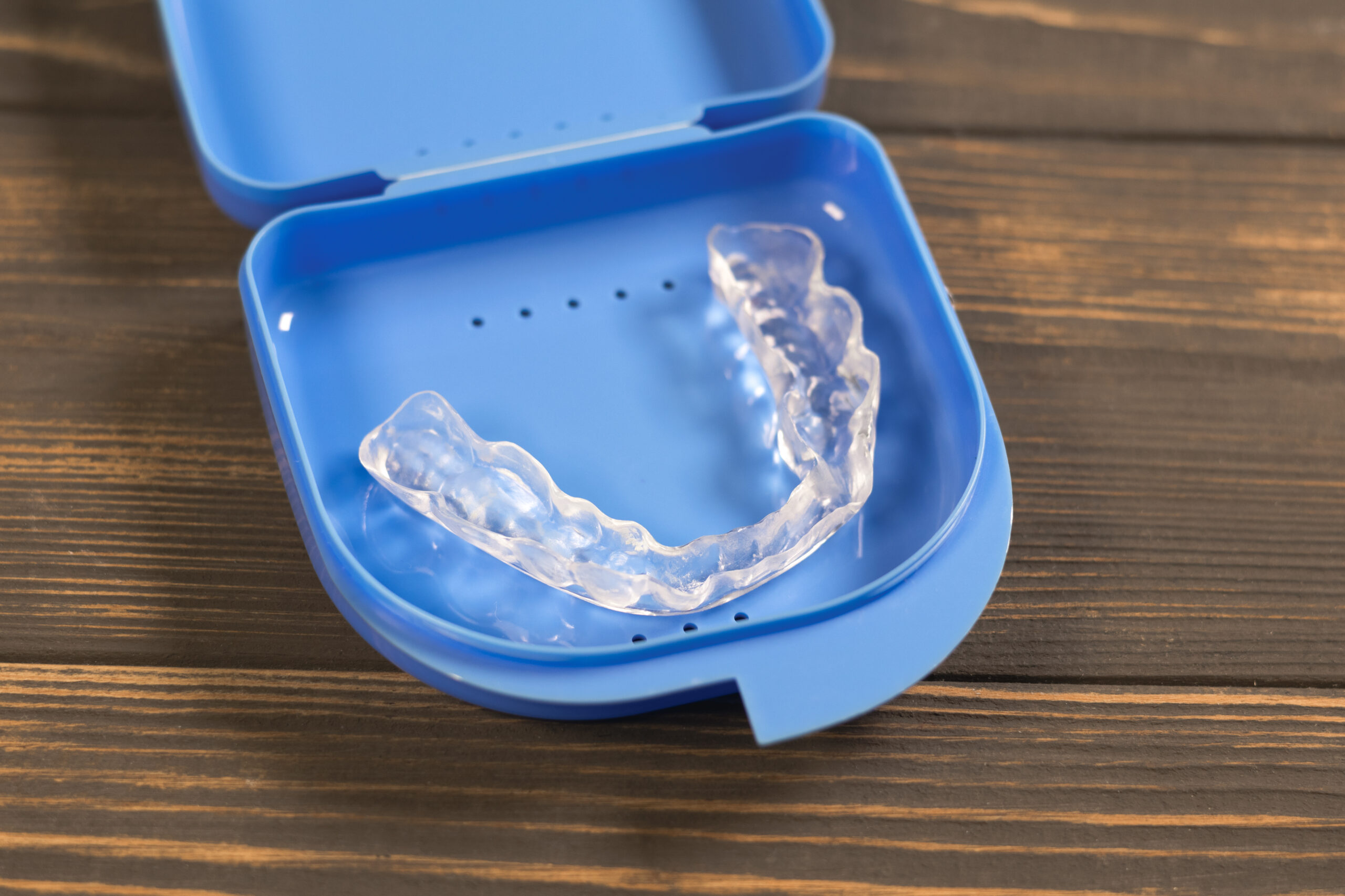
A custom nightguard is a thin, durable oral appliance worn over the upper or lower teeth during sleep. It creates a protective barrier that prevents direct tooth-to-tooth contact, absorbing and redistributing the forces generated by grinding and clenching. Over time, this reduces wear on your enamel, decreases jaw muscle strain, and can significantly lower the risk of cracked teeth and damaged crowns or fillings.
The Fitting Process
Dr. Pauley takes detailed digital or physical impressions of your teeth during your initial appointment. Those impressions are sent to a dental laboratory where your nightguard is fabricated from professional-grade materials selected for durability and comfort. At your follow-up visit, the fit is checked and fine-tuned so the appliance sits snugly without interfering with your natural jaw movement or breathing. Most patients adjust to wearing a nightguard within a few nights of consistent use.
Custom Nightguards vs. Store-Bought Options
Over-the-counter nightguards are available at most pharmacies, but they come with significant limitations. Boil-and-bite guards use a generic shape that does not account for your unique bite pattern, which can lead to poor retention, uneven force distribution, and even jaw discomfort from an ill-fitting appliance. The materials used in store-bought guards also tend to break down quickly, often lasting only a few weeks before they need replacement.
Custom nightguards crafted by Dr. Pauley are built to your exact specifications, providing consistent protection and comfort that can last two to five years with proper care. The investment in a professionally made guard can also prevent far more expensive dental work caused by unchecked grinding, from fractured teeth to the need for full-coverage restorations. If you play sports and are looking for daytime protection, we also offer custom sport mouthguards built with the same attention to fit and durability.
Caring for Your Nightguard
Proper maintenance extends the life of your nightguard and keeps it hygienic. Rinse the appliance with cool water before and after each use, and brush it gently with a soft toothbrush. Avoid using hot water, which can warp the material. Store your nightguard in its ventilated case when you are not wearing it, and bring it along to your dental appointments so Dr. Pauley can inspect it for signs of wear and ensure it still fits correctly.
What to Do if You Suspect You Grind Your Teeth
If you notice any of the symptoms described above, the most important step is to have your teeth and jaw evaluated by a dental provider who understands bruxism. Dr. Pauley will look for telltale wear patterns, check your jaw joint function, and discuss your sleep habits and stress levels. From there, we can determine whether a custom nightguard, adjustments to your bite, or a combination of approaches will give you the relief you need. For patients who feel anxious about dental visits, our sedation dentistry options can help you feel at ease during your appointment.
Schedule Your Nightguard Consultation at Pauley Family Dentistry
Dr. Pauley and the team at Pauley Family Dentistry are committed to helping Lincoln, NE, patients protect their smiles and find lasting relief from the discomfort caused by teeth grinding. With a careful, detail-oriented approach to every nightguard we create, our goal is to provide you with an appliance that fits well, feels comfortable, and stands up to nightly use.
Do not wait for bruxism to cause irreversible damage to your teeth and jaw. Contact our office to schedule your nightguard consultation and take the first step toward better sleep and a healthier smile.