
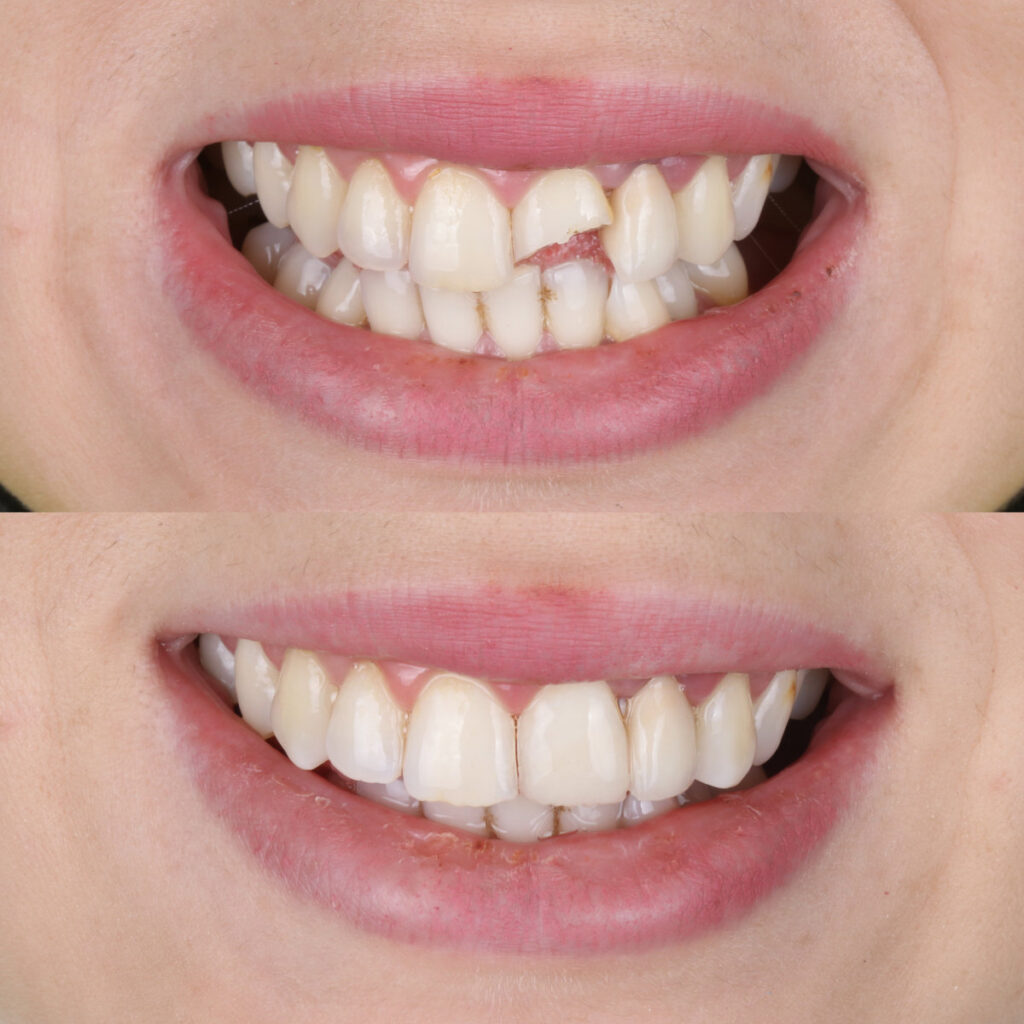
You notice a small chip on your front tooth, a gap that has always bothered you, or a subtle discoloration that no amount of whitening seems to touch. These are the kinds of imperfections that do not go unnoticed in the mirror, yet they often feel too minor to justify a major dental procedure. Composite bonding is the solution many patients do not know they have been waiting for, offering a fast, effective, and minimally invasive way to address a wide range of cosmetic concerns in a single visit.
At Pauley Family Dentistry, Dr. Sean Pauley helps patients understand all of their options before committing to any treatment. If you have been curious about what cosmetic dentistry can do for your smile, composite bonding is often one of the first conversations worth having.
What Is Composite Bonding?
Composite bonding is a cosmetic dental procedure in which a tooth-colored resin material is applied directly to the surface of a tooth, shaped to correct a specific imperfection, and hardened in place using a curing light. The result is a seamless blend with your natural tooth structure that looks and feels completely natural. The resin is carefully color-matched to the surrounding teeth, making the treatment virtually undetectable.
One of the most appealing aspects of composite bonding is how straightforward the process is. In most cases, it requires no anesthesia, no removal of significant tooth enamel, and no lab work. Dr. Pauley can complete the entire procedure chairside, which means you leave the office with a noticeably improved smile in the same appointment.
What Can Composite Bonding Fix?
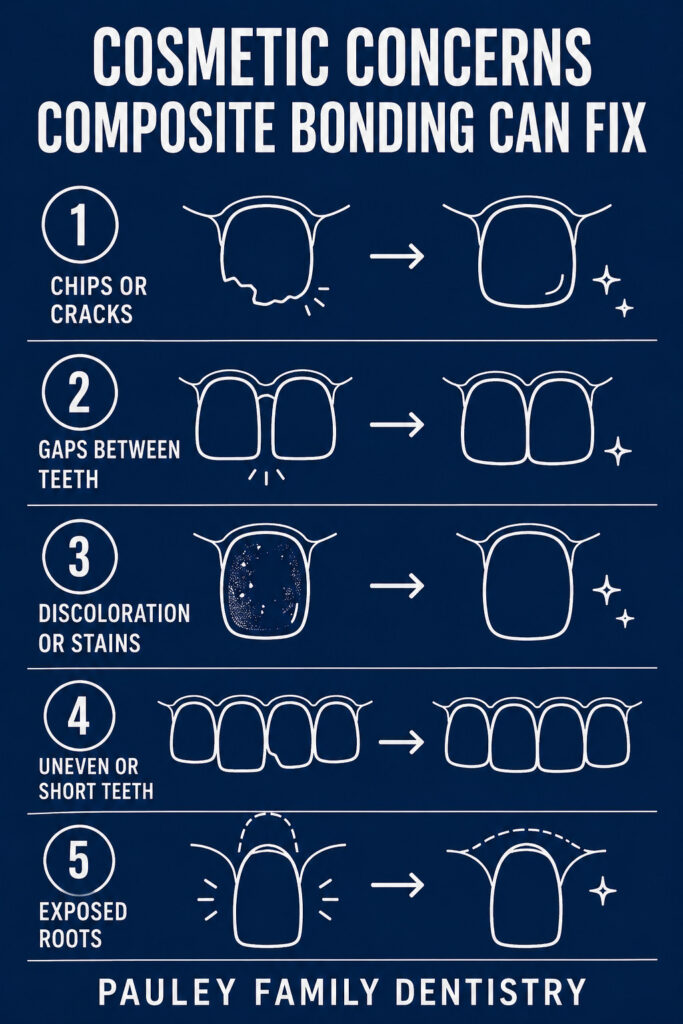
Composite bonding is one of the more versatile tools in cosmetic dentistry. It addresses a wide variety of concerns, and the fact that it works on existing tooth structure without major preparation makes it accessible to a broad range of patients.
Some of the most common issues composite bonding can correct include the following:
- Chipped or cracked teeth: Bonding restores the natural contour of a tooth that has been damaged, smoothing rough edges and rebuilding the missing structure.
- Gaps between teeth: Small spaces between front teeth can be closed by building out the edges of adjacent teeth with resin.
- Discoloration or staining: Teeth that resist whitening treatments due to intrinsic staining can be covered with a thin layer of matched resin.
- Minor shape irregularities: Teeth that appear too short, uneven, or slightly misshapen can be reshaped to create a more balanced look.
- Exposed root surfaces: When gum recession has left a root visible, bonding can protect the area and improve the appearance of the tooth.
Each of these corrections is made with precision, and the outcome is tailored to complement the natural shape and shade of your smile. If you have considered porcelain veneers for similar concerns, bonding may achieve comparable cosmetic results with less cost and no enamel removal.
Is Composite Bonding Right for You?
Composite bonding works best for patients with mild to moderate cosmetic concerns on otherwise healthy teeth. It is not the ideal solution for every situation, and Dr. Pauley will always complete a thorough evaluation before recommending it. According to the CDC’s 2024 Oral Health Surveillance Report, a significant portion of adults in the United States have untreated dental conditions, which highlights how often small issues go unaddressed until they require more involved treatment. Catching and correcting minor cosmetic concerns early can be a meaningful part of maintaining long-term oral health.
Bonding is a particularly strong candidate when the tooth in question is in a low-pressure area of the mouth, such as the front teeth, where it will not face the same grinding forces as molars. It is also a practical first step for patients who are not ready to commit to more permanent solutions. If you have been exploring options like teeth whitening and found that your concerns go beyond color, bonding may be the natural next step.
How Long Does Composite Bonding Last?
With proper care, composite bonding can last several years before any touch-up or replacement becomes necessary. The longevity of the treatment depends on factors like oral hygiene habits, the location of the bonded tooth, and whether the patient avoids behaviors that put stress on the resin, such as biting fingernails or chewing on hard objects.
Routine checkups give Dr. Pauley the opportunity to monitor bonded teeth and address any wear before it becomes a concern. You can learn more about Dr. Pauley’s approach to patient care and what to expect at each visit.
Schedule Your Consultation at Pauley Family Dentistry in Lincoln
If you have been living with a chip, a gap, or a discoloration that affects your confidence, composite bonding may be a simple and effective solution. Dr. Pauley and the team at Pauley Family Dentistry take the time to listen to your concerns and help you find a treatment path that fits your goals and your budget.
To find out whether composite bonding is right for you, we invite you to contact our office and schedule a consultation. A more confident smile may be just one visit away.

