
You sit down in the dental chair, hear the words “you have some decay,” and suddenly wonder whether you are walking out with a quick filling or a crown that takes a few visits. It is a question many patients do not think to ask, but understanding the answer can help you feel confident and informed about the care you receive. The decision comes down to a careful assessment of how much tooth structure remains, where the damage is located, and what will hold up best over time.
At Pauley Family Dentistry, Dr. Sean Pauley takes the time to walk patients through every treatment recommendation, making sure you understand why one option is chosen over another. Whether you are exploring our restorative dentistry services for the first time or following up on a concern from a previous visit, we are here to make the process clear and straightforward.
What Does a Filling Actually Do?
A filling is one of the most common dental treatments available, and for good reason. When a cavity is caught early, the area of decay is relatively small, and the surrounding tooth structure is still strong. In those cases, a filling is typically all that is needed to restore the tooth to normal function.
The process involves removing the decayed portion of the tooth and filling the space with a durable material, most often a tooth-colored composite resin. Our dental fillings are designed to blend naturally with your smile while sealing out bacteria that could cause future problems. Fillings are generally completed in a single appointment and require minimal removal of natural tooth structure, which is always the preferred approach when possible.
When Is a Crown the Right Choice?
A dental crown becomes necessary when the damage to a tooth is more extensive. This might occur when a cavity has gone undetected for a longer period, when a tooth has fractured or cracked, or when an old filling has broken down, and the tooth no longer has enough healthy structure to support a new one. According to the National Institute of Dental and Craniofacial Research, tooth decay is one of the most common chronic conditions in the United States, and when it progresses without treatment, the damage can extend well beyond what a filling can address.
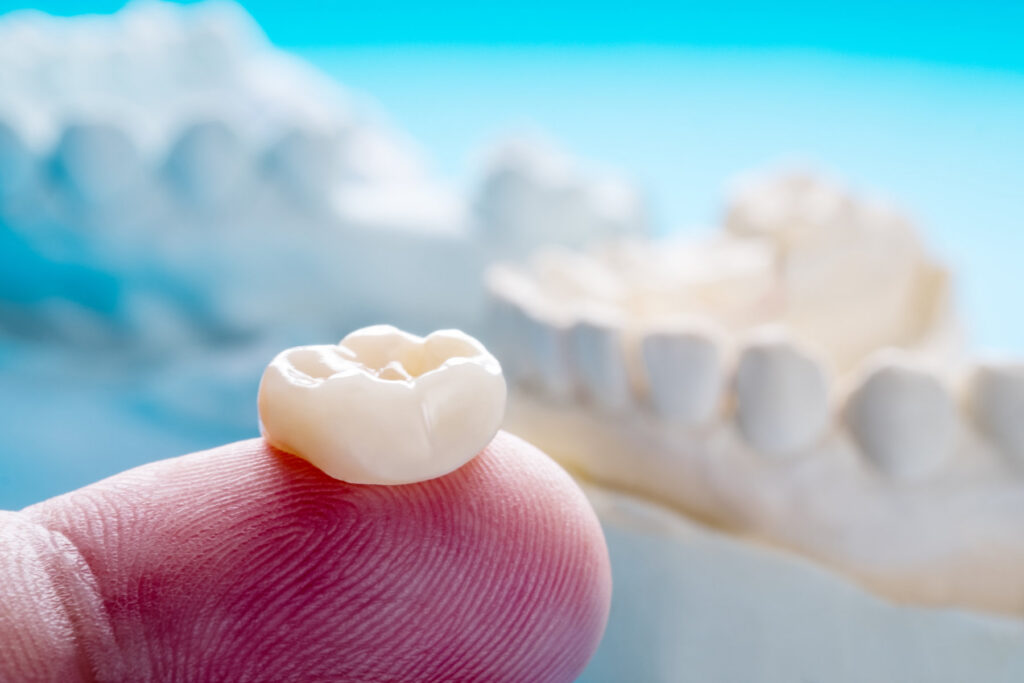
A dental crown fits over the entire visible portion of the tooth, providing full coverage and restoring both strength and appearance. This is especially important for back teeth like molars, which absorb significant biting and chewing pressure throughout the day. While a crown requires more preparation and typically involves two appointments, it is often the most reliable long-term solution for a tooth that needs substantial restoration.
The Key Factors That Guide the Decision
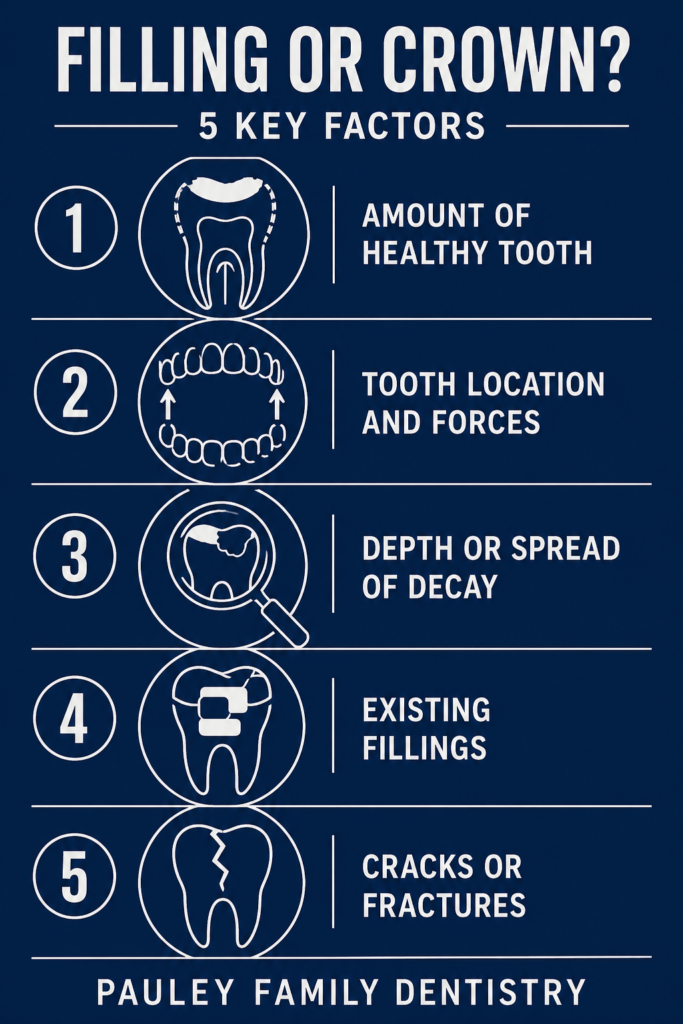
Choosing between a crown and a filling is not a one-size-fits-all process. Dr. Pauley considers several clinical factors before making a recommendation, and understanding these can help patients feel more at ease with the treatment plan.
Here are some of the main considerations that come into play:
- Amount of remaining tooth structure: If less than half of the tooth’s natural structure remains after decay is removed, a filling may not provide adequate support, making a crown the stronger choice.
- Location of the tooth: Front teeth and back teeth serve different functions, and the forces they encounter daily affect which restoration will hold up best.
- Depth and spread of decay: Surface-level decay is a candidate for a filling, while decay that has reached deeper layers or spread broadly across the tooth may require a crown.
- Existing restorations: A tooth with multiple older fillings may need a crown to consolidate and protect what remains.
- Fracture risk: A tooth weakened by cracks or structural compromise benefits from the full coverage a crown provides.
Each of these factors is evaluated during a thorough examination, often supported by our digital X-ray technology that allows Dr. Pauley to assess the depth of decay with precision. Getting a clear picture of what is happening below the surface is essential to making the right call.
Why Catching Problems Early Makes a Difference
One of the most important things to know about this decision is that timing matters. A cavity detected early is almost always a filling. That same cavity, left unaddressed for months or years, can expand to the point where a crown becomes the only viable option. Staying current with routine exams and cleanings gives Dr. Pauley the opportunity to identify decay at its earliest, most treatable stage, before a simple filling turns into a more involved procedure.
Regular preventive visits are not just about cleaning your teeth. They are the foundation of a treatment plan designed to protect your smile over the long term and keep more invasive restorations from becoming necessary.
Schedule Your Visit With Pauley Family Dentistry in Lincoln
Whether you are coming in for a routine checkup or addressing a tooth that has been bothering you, Dr. Pauley and the team at Pauley Family Dentistry are ready to help you make sense of your options. We believe that every patient deserves to fully understand their care, and we will always explain the reasoning behind any recommendation before moving forward.
If you have questions about a cavity, an existing filling, or whether a crown might be in your future, we encourage you to contact our office and schedule an appointment. We make it easy to get the answers you need and the care your smile deserves.

