
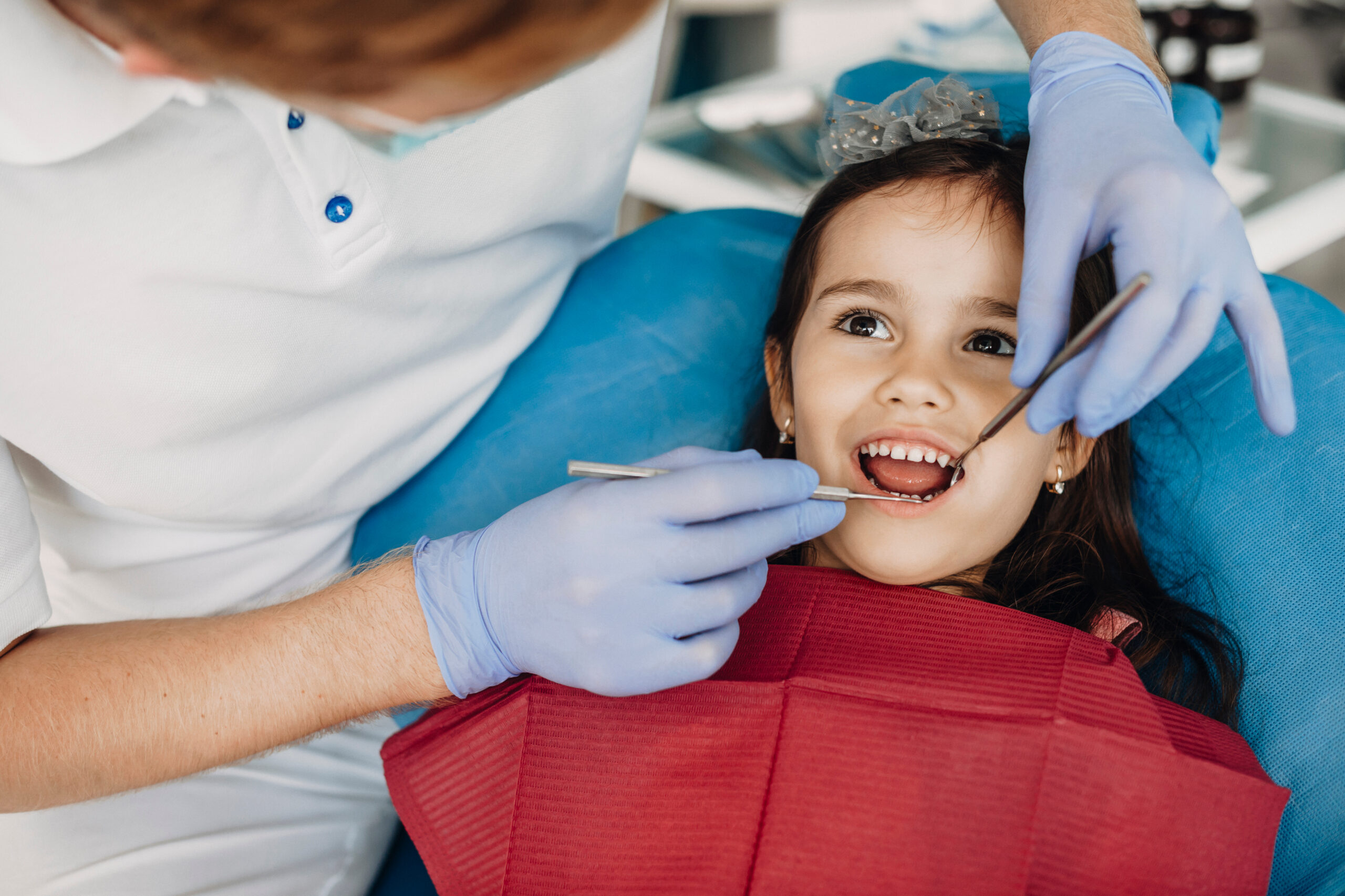
Watching your child’s smile change from a gummy grin to a full set of baby teeth is one of the small joys of parenthood, but it also comes with a long list of questions. When should the first tooth appear? When is the right time for a first dental visit? What happens when those baby teeth start to wiggle loose? Understanding the timeline behind your child’s dental development can help you feel confident instead of caught off guard.
At Pauley Family Dentistry, we believe informed parents make the best partners in their child’s oral health. Our team walks families through each stage of dental growth, from the very first tooth to the eruption of permanent molars, so nothing feels like a surprise. Below, we break down the milestones you can expect and how to support your child’s smile at every step.
First Teeth and the First Dental Visit
Most babies get their first tooth between six and ten months of age, though some arrive earlier and others take a bit longer. The lower front teeth, called central incisors, typically show up first, followed by the upper front teeth over the next few months.
The American Academy of Pediatric Dentistry recommends a first dental exam at the eruption of the first tooth and no later than 12 months of age. Getting ahead of that first visit gives our team a chance to check for healthy development, answer questions about teething, and establish what is known as a dental home. Our pediatric dentistry services are designed around this early-start approach, with a gentle environment that helps young patients feel comfortable from their very first appointment.
Losing Baby Teeth and Growing In Permanent Ones
Around age six, most children begin losing their baby teeth in roughly the same order they came in, starting with the lower and upper front teeth. This process continues gradually through the early teenage years as permanent teeth take their place.
We know this stage can bring a mix of excitement and a few worried questions from parents, especially if a tooth seems loose for a long time or a permanent tooth comes in at an angle. Regular checkups through our preventive dentistry services allow us to monitor this transition and catch any spacing or alignment concerns early, well before they become bigger issues.
Protecting New Teeth From Cavities
Newly erupted teeth, both baby and permanent, are especially vulnerable to decay while the enamel is still maturing. This makes preventive care a priority during childhood rather than an afterthought.
- Fluoride treatments strengthen enamel and help newly erupted teeth resist cavities.
- Dental sealants create a protective barrier over the grooves in molars where food and bacteria tend to collect.
- Consistent brushing habits, guided by a parent until a child can manage on their own, build a foundation for lifelong oral health.
We offer both fluoride treatments and sealants as part of our approach to keeping young smiles healthy through every stage of development. Pairing these preventive services with routine exams and cleanings gives your child the best chance of avoiding decay during these vulnerable years.
Building Confidence Around Dental Visits
Milestones are not just about teeth. They are also about how your child feels walking into our office. A positive early experience with dental care tends to carry forward into adulthood, which is part of why we focus so much on making appointments approachable for our youngest patients.
Our team takes the time to explain what is happening in language kids can understand, and we welcome questions from parents at every visit. Whether your child is coming in for a first checkup or a routine cleaning years later, we want the experience to feel familiar rather than intimidating.
Partner With Pauley Family Dentistry
Every child’s dental development moves at its own pace, and having a trusted family dentistry practice by your side makes it easier to know what is normal and when to ask questions. We are a family-run practice rooted in Lincoln, and we treat every young patient the way we would want our own family treated.
If you are ready to schedule your child’s next checkup or have questions about an upcoming milestone, our contact form is the easiest way to reach our team. We look forward to helping your family navigate every stage of your child’s smile.

