
When tooth decay strikes or a cavity forms, you need a solution that restores function without compromising your smile. The filling material your dentist chooses can affect durability, appearance, cost, and the restoration’s longevity. With several filling options available today, understanding the differences helps you make a sound decision about your dental care.
At Pauley Family Dentistry, we help Lincoln patients navigate their dental filling options with personalized recommendations based on each person’s unique needs. Dr. Pauley evaluates factors like cavity location, size, budget, and aesthetic preferences to determine which filling material will deliver the best long-term results for your oral health.
Amalgam Fillings: The Time-Tested Option
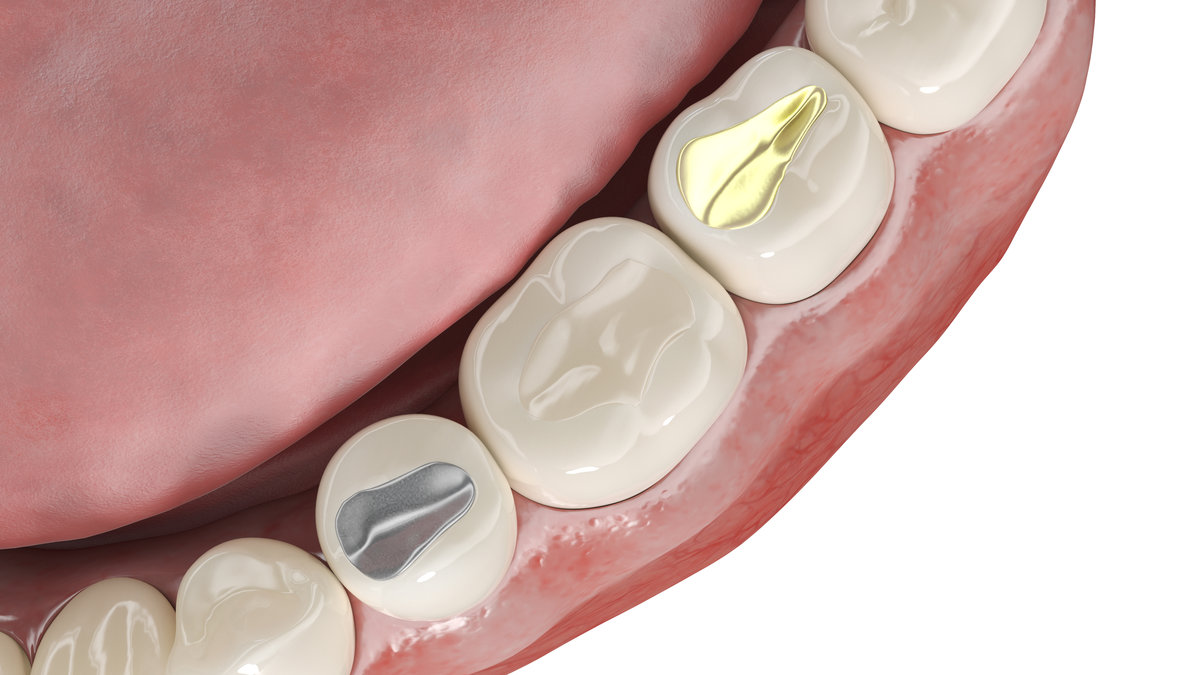
Amalgam fillings have been used in dentistry for over 150 years. This silver-colored material consists of a mixture of metals, including silver, mercury, tin, and copper. The combination creates an extremely durable restoration that can withstand heavy chewing forces.
These fillings work best for molars and other back teeth where strength matters more than appearance. Amalgam typically lasts 10 to 15 years or longer with proper care. The material expands and contracts slightly with temperature changes, which can occasionally cause cracks in the tooth structure over time. According to the American Dental Association, amalgam remains a safe and effective choice for restoring decayed teeth, particularly in high-stress areas of the mouth.
Composite Resin Fillings: Natural-Looking Restorations
Composite resin fillings match the natural color of your teeth, making them virtually invisible. Dentists can shade these tooth-colored materials to blend seamlessly with your surrounding enamel. The resin fuses directly to the tooth structure, allowing your dentist to preserve more of your natural tooth than with amalgam.
These fillings work well for front teeth and visible areas of back teeth. Cosmetic dentistry options often include composite restorations because they enhance appearance while repairing damage. Composite fillings typically last 5 to 7 years, though advancements in materials continue to improve their longevity. They require a completely dry environment during placement, which can make the procedure slightly longer than amalgam placement.
Gold Fillings: Premium Durability
 Gold fillings offer exceptional durability and can last 15 to 30 years or more. These restorations consist of a gold alloy that includes other metals for added strength. The material doesn’t corrode and holds up remarkably well against chewing forces.
Dentists create gold fillings as inlays or onlays in a dental laboratory, which requires at least two appointments. The distinctive gold color makes these fillings highly visible, and the cost typically exceeds other filling options. Some people appreciate the aesthetic of gold, while others prefer more discreet alternatives.
Ceramic Fillings: Stain-Resistant Beauty
Ceramic fillings, usually made from porcelain, provide excellent aesthetics and resist staining better than composite resin. These tooth-colored restorations can match your natural tooth color while offering greater durability than composite materials. The ceramic material closely mimics the translucency and texture of natural tooth enamel.
Like gold fillings, ceramic restorations require fabrication in a dental laboratory. Your dentist will take impressions and place a temporary filling while the lab creates your custom restoration. Ceramic fillings can last 15 years or longer, but may cost more than composite resin. The material works particularly well for inlays, onlays, and larger restorations where strength and appearance both matter.
Glass Ionomer Fillings: Protective and Fluoride-Releasing
Glass ionomer fillings release fluoride over time, which helps protect the tooth from further decay. This unique property makes them valuable for children and patients with high cavity risk. The material chemically bonds to the tooth structure and can be placed in areas where moisture control is difficult.
These fillings appear less natural than composite resin and don’t match tooth color as precisely. They’re also less durable than other options and typically work best for non-biting surfaces, areas below the gum line, or temporary restorations. Glass ionomer materials can seal crowns and work well for small fillings in baby teeth.
Factors to Consider When Choosing a Filling
Your dentist will evaluate several important considerations to recommend the best filling material for your unique situation. Understanding these factors helps you participate actively in treatment decisions and ensures you receive a restoration that meets both functional and personal needs.
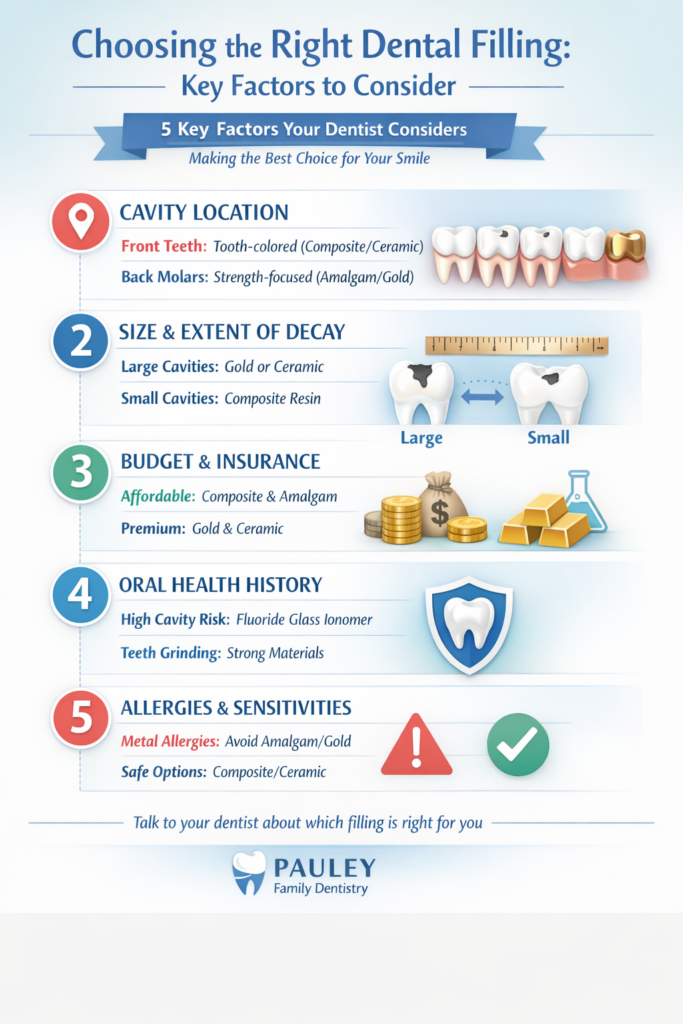
Key factors your dentist considers include:
- Cavity location: Visible front teeth benefit from tooth-colored materials like composite or ceramic, while back molars may prioritize strength with amalgam or gold fillings that withstand heavy chewing forces.
- Size and extent of decay: Larger cavities often require more durable materials such as gold or ceramic, while smaller restorations can be effectively treated with composite resin or glass ionomer.
- Budget and insurance coverage: Costs vary significantly by material, with composite and amalgam typically more affordable than gold or ceramic options that require laboratory fabrication.
- Oral health history: Patients with high cavity risk may benefit from fluoride-releasing glass ionomer, while those who grind their teeth need exceptionally strong materials that resist fracture.
- Allergies and sensitivities: Some individuals have metal allergies that eliminate amalgam or gold as options, making tooth-colored composite or ceramic the safer choice for their health.
Working with your dental team ensures you select a restoration that balances function, appearance, durability, and cost for your specific needs. Many patients also need to think about whether their existing dental work, such as bridges, might affect their filling choice. If you maintain good oral hygiene through regular exams and cleanings, any filling material you choose is likely to last closer to its maximum lifespan.
Quality Dental Fillings at Pauley Family Dentistry
Choosing the right filling material protects your tooth while meeting your personal preferences and budget. Each option offers distinct advantages, from the natural appearance of composite resin to the exceptional durability of gold. The best filling for your cavity depends on multiple factors, including location, size, cost, and your dentist’s recommendation.
At Pauley Family Dentistry in Lincoln, Dr. Pauley brings years of experience helping patients restore damaged teeth with high-quality materials and gentle care. Our practice offers comprehensive restorative services using modern techniques and materials that prioritize both function and appearance. We accept most insurance plans and offer flexible payment options to make quality dental care accessible. Contact us today to schedule your appointment and learn which filling option best suits your smile.
