

Sometimes, the most protective step a dentist can take for your smile is to remove a tooth entirely. When decay, damage, or crowding reaches a point where no other treatment can preserve the surrounding teeth and bone, extraction becomes the clearest path to long-term oral health. Recognizing the warning signs early gives you the opportunity to act before a manageable problem becomes a serious one.
At Pauley Family Dentistry in Lincoln, Nebraska, Dr. Sean Pauley takes a careful, conservative approach to every treatment decision. A graduate of the University of Nebraska Medical Center College of Dentistry, Dr. Pauley weighs every available option before recommending tooth extraction. When removal is the right call, he makes the process as comfortable and straightforward as possible for each patient.
Common Signs a Tooth May Need to Be Removed
Several conditions can make an extraction the most appropriate course of treatment. Understanding these signs can help you have a more informed conversation with your dentist and feel prepared if that recommendation comes.
Severe Decay With No Viable Restoration
When decay penetrates deeply into a tooth’s inner structure and the damage is too extensive for a filling or crown to repair, extraction may be the only remaining option. Leaving a tooth in this condition can allow infection to spread to neighboring teeth and the surrounding bone, creating a more involved problem down the road.
Persistent Pain or Pressure
A tooth that causes persistent, unexplained pain, especially pain that intensifies with pressure or radiates into the jaw, may be signaling damage or infection below the gum line. While not every painful tooth requires removal, pain is one of the clearest indicators that prompt attention from a dental professional is needed.
Significant Looseness
Adult teeth should not feel loose. When a tooth becomes noticeably mobile, it typically reflects substantial bone or tissue loss from advanced gum disease. At that stage, restorative dentistry options may be limited, and extraction can be necessary to prevent further deterioration of the surrounding structures.
Crowding or Orthodontic Need
Some extractions are planned rather than reactive. When there is not enough room in the mouth for teeth to align properly, removing one or more teeth creates the space needed for the rest of the smile to settle into a healthier position. This is a common component of broader orthodontic treatment.
Impacted Wisdom Teeth
Wisdom teeth that become trapped beneath the gum line or emerge at an angle can cause pressure, pain, and recurring infections in the surrounding tissue. Because they are difficult to clean thoroughly, they also raise the risk of decay in adjacent teeth. In these cases, oral surgery to remove the affected tooth is often the most effective solution.
Understanding the range of situations where extraction may be appropriate helps set realistic expectations for your care. Each of the scenarios above represents a moment when acting promptly protects more than just the tooth in question.
What the Extraction Process Actually Looks Like
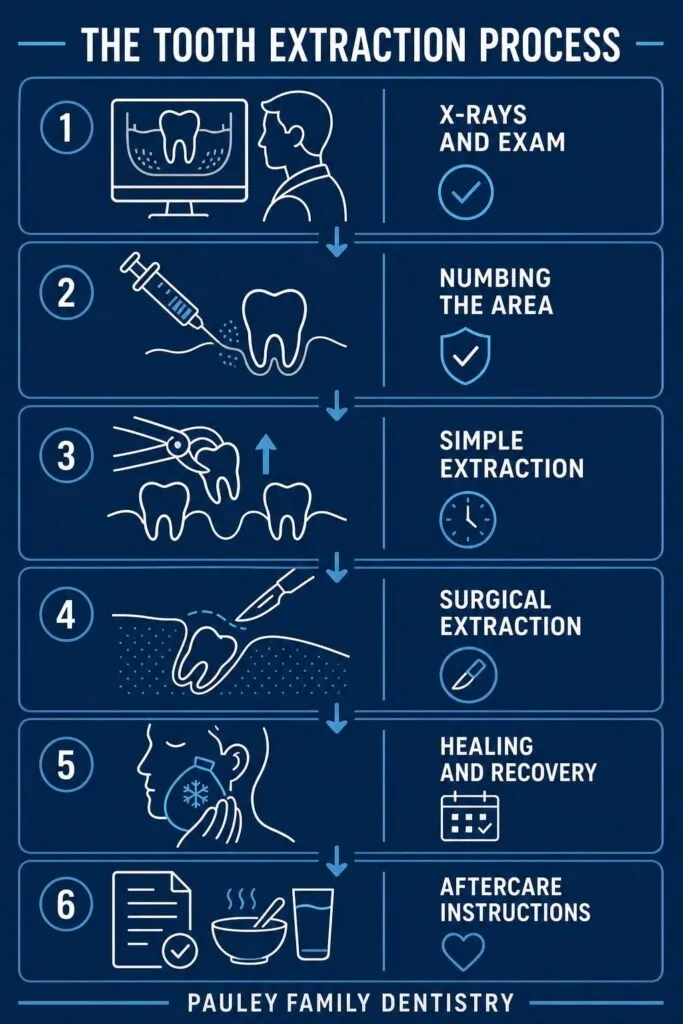
For many patients, anxiety about extractions comes from not knowing what to expect. The process is more routine than it is often imagined.
Before proceeding, Dr. Pauley takes digital X-rays and conducts a thorough examination to confirm that extraction is the right choice. According to the U.S. National Library of Medicine, a local anesthetic is used to numb the area so patients feel pressure rather than pain during the procedure. For straightforward extractions, where the tooth is fully visible above the gum line, the process is typically brief. Surgical extractions, such as those involving impacted teeth, involve a small incision but follow the same principle of ensuring the patient is fully comfortable throughout.
Recovery from a routine extraction generally involves a few days of mild swelling and soreness. Following post-operative instructions carefully, including dietary restrictions and activity guidelines, makes a meaningful difference in how quickly healing progresses. Patients who experience significant anxiety about dental procedures can ask about our sedation dentistry options, which are available to help make the experience as manageable as possible.
Pauley Family Dentistry Is Here When You Need a Trusted Answer
Dental discomfort and uncertainty about a tooth’s condition are not things worth waiting on. If you have been experiencing persistent pain, noticeable looseness, or other changes in your oral health, our team is ready to provide a thorough evaluation and an honest recommendation. We also offer emergency dental services for patients who need prompt attention.
Dr. Pauley earned his Doctor of Dental Surgery degree from the University of Nebraska Medical Center College of Dentistry and is an active member of the American Dental Association, the Nebraska Dental Association, and the Lincoln Dental Association. He is committed to providing Lincoln families with the kind of thoughtful, transparent care he would want for his own family. When you are ready to take the next step, contact our office to schedule your visit with Pauley Family Dentistry.

