

Missing teeth affect more than just your smile’s appearance. Whether you’ve lost a tooth due to decay, injury, or gum disease, the gap left behind can make eating difficult, cause neighboring teeth to shift, lead to bone loss in the jaw, and create self-consciousness about your appearance. If you’ve already undergone implant surgery or are planning to work with a specialist for placement, understanding what happens during the restoration phase is just as important as understanding the procedure itself.
At Pauley Family Dentistry, Dr. Pauley focuses on the restorative side of dental implant treatment, working with patients who have had implants placed by an oral surgeon or periodontist and are ready for their final crown, bridge, or other prosthetic restoration. Our restorative dentistry approach is centered on precision fit, natural aesthetics, and long-term function. We collaborate closely with the specialists involved in your care to ensure a smooth transition from implant placement to a beautifully restored smile.

A dental implant is made up of two primary components: the titanium post surgically placed into the jawbone, and the restoration that sits on top of it. The restoration is the visible portion of your new tooth, typically a custom-made crown, bridge, or implant-supported denture that is attached to the implant via a connecting piece called an abutment. While placement is handled by a surgical specialist, the restoration phase is where your general dentist plays a central role.
Implant-supported restorations have grown significantly in use over recent decades. Research published in the Journal of Dental Research examining National Health and Nutrition Examination Survey data found dental implants have become an increasingly popular treatment choice for replacing missing teeth in the United States. The restoration is what transforms a surgically integrated implant into a fully functional, natural-looking tooth, and the quality of that restoration makes a meaningful difference in your long-term comfort and satisfaction.
You may be surprised to learn that your general dentist actually plays an important role in the dental implant process.
Dental implant treatment is a multi-step process that often involves more than one provider. An oral surgeon or periodontist typically handles the surgical placement of the implant post, while your general dentist oversees the restorative phase. At Pauley Family Dentistry, we work in close communication with your surgical specialist to ensure treatment is properly sequenced and that the final restoration is designed to integrate seamlessly with your bite and surrounding teeth.
Once your implant has fully integrated with the jawbone, typically several months after placement, you'll return to our office for the restoration process. This begins with impressions or digital scans of your mouth, which are used to design a custom crown, bridge, or other prosthetic that precisely matches the size, shape, and color of your natural teeth. After the abutment is connected to the implant, your final restoration is attached to complete your smile.
The type of restoration used depends on how many teeth are being replaced and your specific clinical situation. Understanding the options helps you have an informed conversation with your dental team about what’s right for you. Common restoration types include the following:
Each option is custom fabricated to blend naturally with your smile, and all are designed to restore full chewing function. Your treatment plan will reflect your specific needs and the recommendations of both your surgeon and Dr. Pauley.
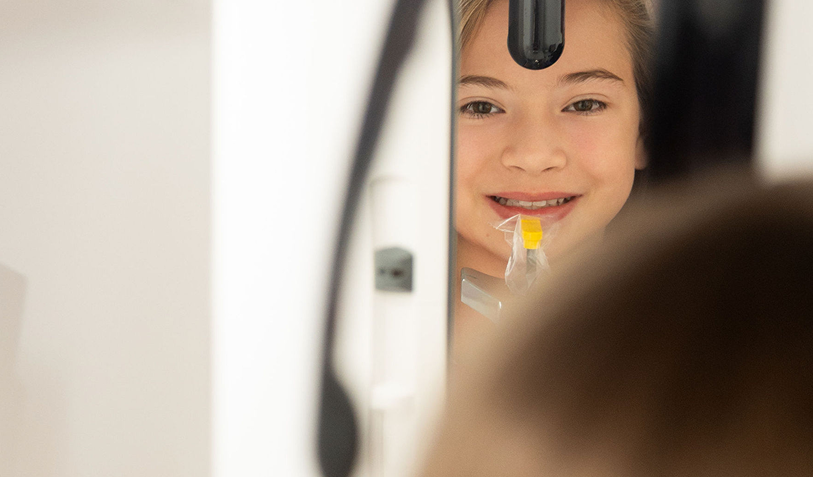
Digital x-ray technology prioritizes patient safety through reduced radiation exposure and careful adherence to imaging guidelines. Modern dental practices follow strict protocols to ensure x-rays are taken only when diagnostically necessary and with minimal radiation exposure.
The radiation dose from digital dental x-rays is extremely low, especially when compared to other common radiation sources you encounter daily. A single digital dental x-ray exposes you to less radiation than you receive from natural background sources during a few hours of normal daily life. The cumulative radiation from a full series of dental x-rays is comparable to the exposure from a short airplane flight.
Dental professionals take additional precautions to protect you during imaging. Lead aprons and thyroid collars shield your body from scattered radiation, while precise beam collimation limits exposure to only the area being imaged. Pregnant women should inform their dentist of their pregnancy, as x-rays can typically be postponed until after delivery unless emergency treatment requires diagnostic imaging.
Implant-supported restorations require the same daily care as natural teeth. Brushing twice daily with a soft-bristled toothbrush and flossing around the restoration each day helps prevent gum inflammation and protects the peri-implant tissue. While the crown or bridge itself cannot develop decay, the surrounding gum tissue and bone are still susceptible to complications if oral hygiene is neglected.
Regular preventive dentistry visits are an important part of protecting your investment long-term. During routine exams and cleanings, we monitor the fit and condition of your restoration, assess the health of surrounding gum tissue, and address any early signs of complications before they progress. Patients who grind their teeth may benefit from a custom nightguard to protect the restoration from excessive force.
Whether you’ve recently completed implant surgery with a specialist or are in the planning stages of replacing a missing tooth, our team at Pauley Family Dentistry is here to guide you through the restorative phase of care. Dr. Pauley brings a precise, patient-centered approach to every restoration, ensuring your new tooth looks, fits, and functions exactly as it should.
Ready to take the next step toward completing your smile? Contact our Lincoln office today to schedule a consultation and learn how we can work together to deliver a restoration you’ll be confident in for years to come.
Your opinions are important to us. Whether it is a simple question or a valuable suggestion, we are here 24/7. You can call us by phone or email us directly.
Located within the Trade Center